

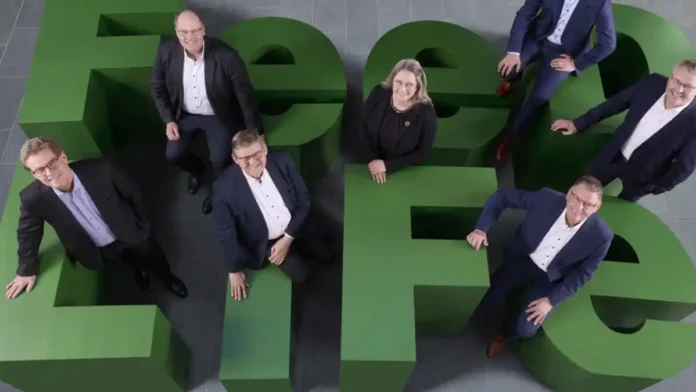
Arla Foods and DMK Group have officially completed their merger, creating what the companies describe as Europe’s leading dairy cooperative.
The merger became official on 1 June 2026 and brings together around 11,200 farmers and 28,800 employees across multiple international markets.
The newly combined business will operate under the Arla name, with headquarters remaining in Viby J, Denmark.
Together, the companies now manage a combined milk pool of 19.4 billion kilograms annually and generate pro forma annual revenue of more than €20 billion.
The deal significantly expands Arla’s position across European dairy supply chains at a time when food security, agricultural resilience, and stable dairy sourcing are becoming increasingly important for supermarkets and food manufacturers.
Larger Dairy Scale Across Europe
The merged cooperative now has local operations across seven European countries alongside international activities in markets including the Middle East and wider global export regions.
Arla said the merger is designed to strengthen long-term dairy production capacity while improving operational resilience during ongoing geopolitical and economic uncertainty.
The combined company will continue producing dairy products and ingredients across consumer, foodservice, and industrial channels.
That includes branded dairy products sold under names such as Arla®, Lurpak®, Puck®, and Castello®.
The merger also strengthens Arla’s whey ingredients business and expands its manufacturing scale across European dairy processing operations.
What The Merger Means For Retailers
The deal could have wider implications for supermarkets, private label dairy sourcing, and European food manufacturing over the coming years.
Larger dairy groups are increasingly investing in:
- supply-chain stability,
- sustainability programmes,
- dairy innovation,
- and long-term farming partnerships.
For retailers, bigger cooperative structures may help improve sourcing consistency across milk, cheese, butter, yogurt, and ingredient categories.
The merger also increases Arla’s negotiating scale across European grocery markets as supermarkets continue facing pressure around pricing, inflation, and food security.
Private label dairy production may also become an important growth area as large retailers continue expanding store-brand food ranges across Europe.
Integration Process Begins
Under the new structure, Jan Toft Nørgaard will serve as Chair, while Peder Tuborgh continues as CEO of Arla Foods.
Former DMK executive Ingo Müller has joined Arla’s executive management team as Executive Vice President and Chief Integration Officer.
The integration process will continue over the next two years, including the merger of farmer cooperatives linked to the former DMK Group structure.
DMK GmbH and its subsidiaries will continue operating as subsidiaries under the Arla Foods group structure while retaining their legal status during the transition period.
The companies also confirmed that Day One celebrations were held across offices and production locations in Denmark, Germany, the Netherlands, the UK, Sweden, Finland, and Dubai.
The Arla Foods DMK merger marks one of the largest dairy consolidation moves in Europe in recent years and could reshape parts of the region’s dairy supply network.


