

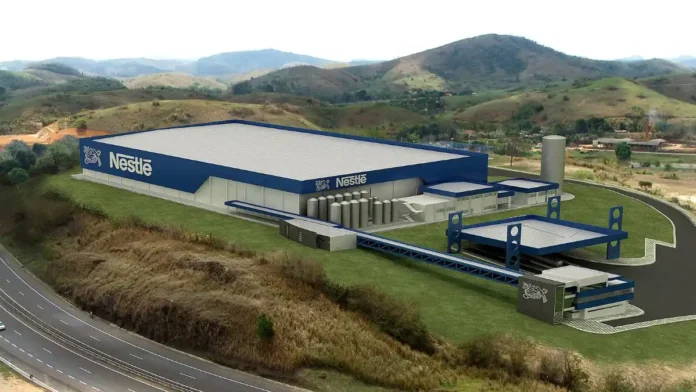
Nestlé will invest R$540 million ($100 million) in its Araçatuba factory in São Paulo state, Brazil, by 2028, expanding production capacity for infant formula, medical nutrition and healthy-ageing products.
The investment will fund industrial modernisation, new production technologies and measures to improve operational efficiency. Nestlé said the work would strengthen one of the most technically complex manufacturing sites in its Brazilian network.
Araçatuba is Nestlé Brazil’s largest factory by net revenue. It currently manufactures more than 180 products covering different stages of life, with most output supplied to the Brazilian market.
Part of the factory’s production is also exported to markets across Latin America and the Middle East. The expansion could therefore support both Nestlé’s domestic nutrition business and its regional supply operations.
The factory employs approximately 800 people directly and supports a further 200 indirect jobs. Nestlé has not disclosed whether the investment will create additional positions.
The project forms part of the company’s wider 2025–2028 investment programme in Brazil. Nutrition and health is one of Nestlé’s four priority growth businesses globally, making the Araçatuba plant strategically important for products that require specialised manufacturing and strict quality controls.
Infant formula produced at the site undergoes around 1,200 microbiological, chemical, allergen and packaging tests before reaching consumers, according to the company. Each delivery of milk used as a raw material is subject to more than 20 tests before entering production.
For Brazilian food retail, the investment strengthens domestic capacity in high-value nutrition categories. Infant formula, medical nutrition and healthy-ageing products require specialised supply chains and consistent availability, particularly across pharmacies, supermarkets and other healthcare-related retail channels.
Nestlé is also updating its Medical Visit Programme at the factory. From 2027, the company expects the facility to receive more than 700 doctors, nutritionists and other healthcare professionals annually.
Environmental improvements are already part of the Araçatuba operation. The factory uses biomethane to produce hot air for powdered milk manufacturing, reducing greenhouse gas emissions from that process by approximately 20%.
It also operates with electricity from what Nestlé describes as 100% clean sources and reuses water at different production stages. Waste is diverted from landfill and incineration through recycling, composting and co-processing.
The replacement of natural gas with biomass in heating systems has reduced emissions from that process by 23%, the company added.
Nestlé operates 18 industrial facilities and 12 distribution centres across Brazil. The Araçatuba expansion will continue through 2028 as the group increases the factory’s efficiency, technology and capacity for nutrition products.


