

Britain’s £518 billion manufacturing sector is struggling to attract young talent, despite contributing heavily to the UK economy and food supply chain.
New research commissioned by Nestlé UK & Ireland shows that while 59% of young people aged 16–24 find manufacturing interesting, only 4% consider it a top career choice.
The findings raise long-term concerns for UK food and beverage production, including packaging, factory automation and supermarket supply chains.
Why UK Manufacturing Faces a Talent Gap
According to the study of 2,000 young people, only 28% believe manufacturing still happens in the UK. Three in ten think most production has moved overseas.
At the same time:
-
33% say social media platforms like TikTok and YouTube influence their career decisions
-
20% prefer healthcare careers
-
16% choose creative industries
-
12% select retail
-
11% favour technology
-
Engineering ranks at 9%, more than double manufacturing at 4%
Despite supporting more than 7 million jobs and generating £518 billion in economic output, manufacturing is failing to connect with younger audiences.
Skills Exist — Perception Does Not
The research suggests the issue is not capability.
-
85% of young people describe themselves as confident problem solvers
-
83% say they are creative
-
Only 35% associate creativity with manufacturing
-
Just 48% link manufacturing roles with problem-solving
Nearly half said they would reconsider the sector if they saw real-life examples of modern factories or better understood the impact of these roles on everyday life.
For UK FMCG production, this gap matters.
Food manufacturing underpins supermarket supply, private label production and packaging systems. Apprenticeship programmes are increasingly critical in sustaining domestic capacity.
Packaging Apprenticeships Highlight Sector Evolution
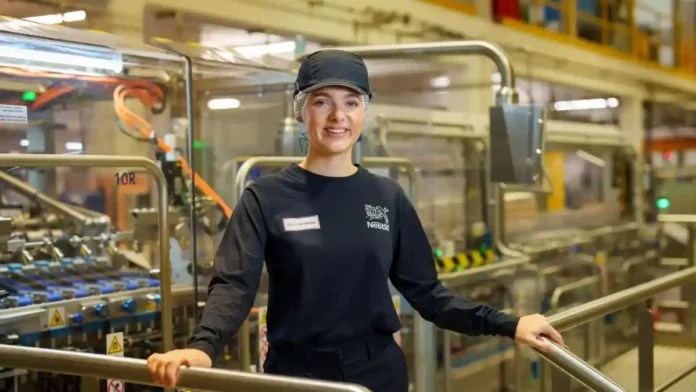
At Nestlé’s Dalston factory in Cumbria, packaging apprenticeships combine factory operations with sustainability and innovation work.
The company supports more than 42,000 jobs across the UK economy. It is promoting apprenticeships and graduate pathways in design, innovation, technology and operations to address future workforce needs.
The study was conducted by Censuswide between January 28 and February 2, 2026.
Why It Matters
UK food and beverage manufacturing remains central to supermarket supply chains, private label development and packaging compliance.
If younger workers continue overlooking factory-based careers, long-term risks could emerge in:
-
Domestic production resilience
-
Skills availability in automation and packaging
-
Investment confidence in UK facilities
With inflation pressure and supply chain stability still shaping the grocery sector, workforce visibility is becoming a structural issue for FMCG operators.
Manufacturing may be economically dominant — but without improved perception among young people, the sector faces a potential future talent constraint.