

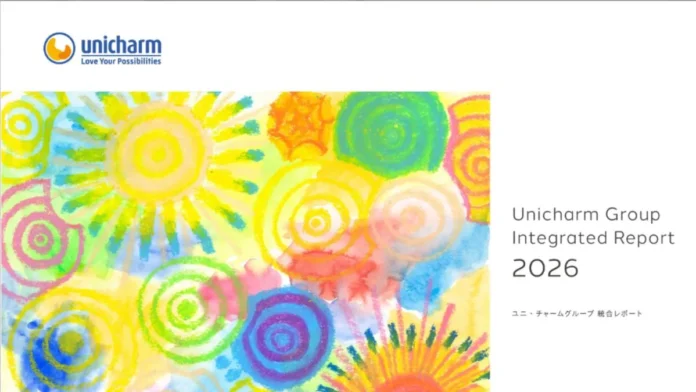
Unicharm Corporation has published its Integrated Report 2026, outlining its long-term growth strategy, sustainability priorities and human capital initiatives as the Japanese consumer goods group works toward its medium- to long-term ESG goals under its “Kyo-sei Life Vision 2035”.
The report, released on the company’s investor relations website, explains how Unicharm uses six forms of capital—financial, manufacturing, intellectual, human, social and natural capital—to create long-term value and support sustainable business growth.
Unicharm is one of Asia’s largest consumer goods companies, supplying baby care, feminine hygiene, adult incontinence and pet care products to supermarkets, pharmacies and retailers across multiple global markets.
At a Glance
- Unicharm published its Integrated Report 2026.
- The report outlines progress toward “Kyo-sei Life Vision 2035”.
- The company highlighted financial and non-financial ESG strategies.
- New disclosures include expanded human capital indicators.
- The report provides updates on climate and natural capital impacts.
- Sustainability initiatives include recycled disposable diapers and CO2 reduction efforts.
- The English-language version is expected to be released in mid-August 2026.
What Is Unicharm’s Integrated Report 2026?
The integrated report combines financial information with environmental, social and governance disclosures to provide investors and stakeholders with a broader picture of the company’s long-term strategy and value creation.
According to Unicharm, the report details how the business plans to achieve sustainable growth through its medium-term management plan, “Project Renaissance”, and its ESG roadmap, “Kyo-sei Life Vision 2035”.
The company has also expanded disclosures around human capital management, including global talent development and employee engagement initiatives.
Sustainability And Climate Disclosures Expanded
The 2026 report includes updated information on sustainability performance indicators and progress in several key areas, including:
- Commercialisation of recycled disposable diapers.
- Reduction of carbon emissions.
- Diversity and inclusion initiatives.
- Climate-related financial impacts.
- Natural capital disclosures aligned with TCFD and TNFD recommendations.
These areas are becoming increasingly important for investors and major retailers seeking greater transparency from FMCG suppliers regarding environmental and social performance.
Why It Matters To The Grocery Industry
Although the report does not announce new products or retail partnerships, it provides insight into how a major consumer goods supplier is approaching long-term sustainability and operational resilience.
Large retailers and supermarket groups are placing increasing emphasis on ESG performance across their supply chains, including emissions reductions, responsible sourcing and circular economy initiatives.
As one of Asia’s leading hygiene and personal care manufacturers, Unicharm’s sustainability strategies may influence future supplier expectations and category developments across global grocery and health and beauty sectors.
What Happens Next?
Unicharm’s English-language Integrated Report 2026 is scheduled for publication in mid-August 2026, providing international investors and business partners with further access to the company’s latest strategy and sustainability disclosures.
The company is expected to continue implementing its “Project Renaissance” management plan and advancing its long-term ESG targets under “Kyo-sei Life Vision 2035” as it pursues sustainable growth across global markets.


