

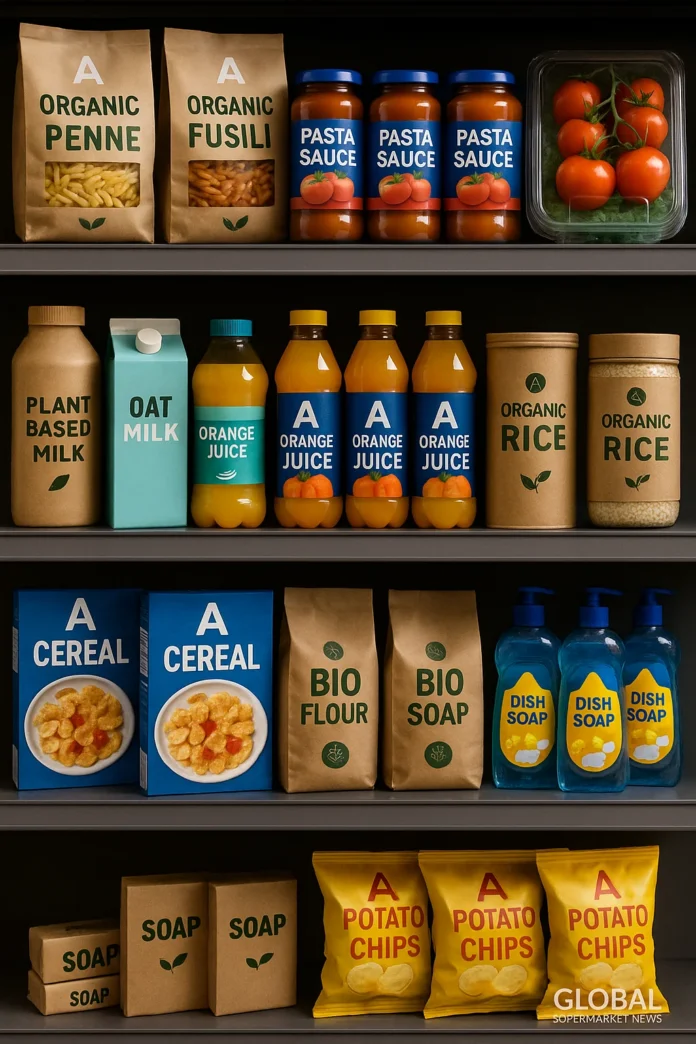
National brands are still in the fight — here’s how they’re adapting to win
Are A brands still relevant in 2025?
Yes — but they’ve had to evolve.
Private label is no longer the budget option. In 2025, it’s often the preferred brand on the shelf. So A brands — the household names, the global giants — are being forced to think smarter, act faster, and fight harder for attention, loyalty, and shelf space.
Retailers want differentiation. Shoppers want value. And the brands that still dominate? They’ve adjusted to both.
7 Ways A Brands Compete with Private Label in 2025
-
Differentiating through innovation
-
Creating exclusive retail SKUs
-
Playing premium where private label can’t
-
Out-investing in loyalty and advertising
-
Leveraging trusted brand equity
-
Moving faster with supply chain agility
-
Doubling down on sustainability leadership
Let’s take a closer look.
1. Innovation is the weapon A brands still own
A brands still lead in category-changing launches.
Whether it’s functional ingredients, patented packaging, or bold crossovers, they do what private label often can’t:
-
Invest in R&D
-
Launch riskier concepts
-
Set category direction
Brands like PepsiCo, Nestlé, and Unilever continue to launch trend-setting formats that private label follows — not leads.
2. Exclusive SKUs give retailers a reason to list
To stay on shelf, many A brands now create exclusive packs, formats, or flavours for key retailers.
This lets them:
-
Avoid direct price comparisons
-
Add perceived value
-
Co-own the shopper experience
You’ll see it with limited runs, multipack exclusives, or collaborations between retailers and A brands.
3. Premiumisation beats the race to the bottom
Instead of trying to undercut private label, smart brands move upmarket:
-
Glass packaging
-
Clean-label recipes
-
Story-led branding
-
Nutritional enhancements
This protects margin and allows brands to compete on experience and aspiration, not just price.
4. Big-brand marketing still moves baskets
Private label can feel invisible outside the store. A brands? They’re everywhere.
Even in 2025, they dominate:
-
Retail media
-
Social campaigns
-
Broadcast and influencer strategies
-
Shelf-talker innovation
-
In-store experiences
This omnipresence builds mental availability — a key lever for supermarket performance.
5. Brand equity still drives trust
Familiarity matters — especially in turbulent times.
Shoppers trust A brands for:
-
Safety and consistency
-
Quality guarantees
-
Family recognition
-
Category expertise
Private label might win on value, but A brands still win when shoppers want assurance.
6. Faster supply chains give them an edge
Big brands used to be slow. In 2025, they’ve adapted.
Top A brands now:
-
Localise production
-
Digitise demand forecasting
-
Rapid-prototype for launches
-
Flex promo activity week-to-week
This agility lets them respond to category shifts faster than private label, which often requires full buyer approval.
7. Sustainability storytelling sets them apart
Private label often matches A brands on price and packaging, but can’t always tell a compelling sustainability story.
A brands with:
-
Net-zero commitments
-
Transparent supply chains
-
Regenerative sourcing
-
ESG certifications
…can build long-term loyalty beyond cost — especially among Gen Z and millennial shoppers.
Final Thoughts: The A brand isn’t dead. It’s just different.
In 2025, A brands are no longer guaranteed shelf space.
They earn it through:
-
Innovation
-
Exclusivity
-
Visibility
-
Trust
-
Premium positioning
Retailers aren’t listing brands for the logo. They’re listing them for value-add, story, speed, and synergy.


